

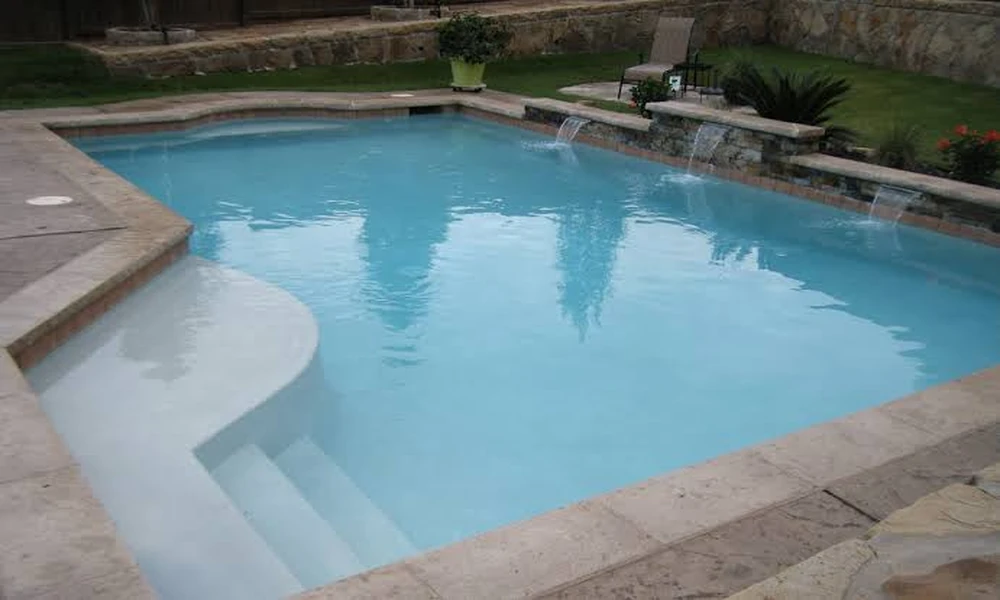
Phoenix is hard on pools in ways that surprise newcomers. The water that fills them is mineral heavy, the summer sun can push surface temperatures past anything a pool in a milder city will see, and evaporation is relentless. Plaster in this climate is not simply a coating. It is a surface under constant chemical and thermal pressure, and how it holds up depends on understanding the forces involved. If you are researching Phoenix pool plastering, it helps to know what the desert asks of a finish before you choose one.
Hard Water Is the First Challenge
Much of the water in the Phoenix area is high in dissolved minerals, especially calcium. That sounds harmless until you add heat and evaporation. As water evaporates, minerals stay behind, and the concentration in the pool climbs steadily. Calcium that has nowhere to go deposits on the surface as hard, white scale, usually first along the waterline, on steps and around the return fittings.
Scale is not just unsightly. It roughens the surface, traps stains and, once established, can be difficult to remove without risking the plaster beneath. Pools here benefit from regular testing of calcium hardness, alkalinity and pH, and from partial draining and refilling when mineral levels climb too high. Leaving that balance to chance is the quickest route to a rough, blotchy finish.
Heat Changes the Chemistry
Warm water holds chemistry differently than cool water. As temperatures climb, the tendency to form scale rises, and chlorine is consumed faster under strong sun. A pool that stays balanced in April can drift quickly in July. Many Phoenix owners find that testing weekly, or more often in peak summer, is the only reliable way to keep ahead of it.
Stabilizer, which protects chlorine from sunlight, helps, but too much of it reduces chlorine’s effectiveness. Like most things in pool care, the answer lies in a moderate range rather than in extremes. The Centers for Disease Control and Prevention offers practical guidance on healthy pool water chemistry and maintenance that explains how pH, sanitizer and circulation work together, and it is a useful baseline for any owner.
Thermal Stress and Cracking
Desert temperature swings test a pool shell. A surface can bake in the afternoon and cool noticeably overnight, and an empty pool, which has no water to moderate the temperature, is especially vulnerable. Plaster that sits dry under the Arizona sun can develop fine cracking or crazing very quickly.
This is a practical concern for scheduling. When a pool is drained for resurfacing, work needs to proceed promptly, and the pool should be refilled right after application. Experienced crews in the area plan their mixes, timing and startup around the temperature, often working early in the day to avoid rapid drying that can weaken the surface.
Choosing a Finish for the Desert
Different finishes respond differently to heat and minerals.
Traditional white plaster is smooth, classic and economical, but it is the most vulnerable to etching and staining, and tends to show wear sooner in harsh water conditions. Quartz and pebble aggregate finishes are considerably tougher, resisting chemical attack and staining better, and they typically last longer, though they cost more and feel rougher underfoot, which some swimmers notice on bare feet. Polished and glass bead blends fall in between, offering a smoother feel with improved durability.
Surface color matters in this climate too. Darker finishes can absorb more heat and tend to show calcium scale more visibly, while lighter ones look cooler but reveal stains more readily. There is no single correct answer, only a trade-off among appearance, comfort, durability and budget.
The Startup Period Deserves Respect
The first weeks after plastering are when the surface is most fragile, and in Phoenix, the heat and water quality make that period even more important. Fill the pool continuously and without interruption, since pausing can leave a ring at the waterline. Follow the startup instructions provided by your plasterer for brushing, chemical balance and circulation, and avoid heavy chemical shocks in the early days. Because local tap water is mineral rich, some installers recommend specific startup chemistry to reduce the risk of scale or mottling on a fresh finish. Ask about this directly rather than assuming it will be handled automatically.
Signs Your Surface Is Struggling
Watch for these common warning signs:
- White crusty buildup that returns after cleaning
- A rough texture on steps, benches and the shallow end
- Dark or rust-colored stains near fittings and drains
- Dull, chalky patches where the surface seems to be wearing away
- Small cracks, hollow-sounding areas or small pieces flaking off
- Water loss that exceeds normal evaporation
Not every sign means resurfacing is needed. Some are cosmetic and can be addressed with cleaning or targeted repair. Others point to a failing bond or structural movement, and a qualified professional should assess them before you decide.
Questions Worth Asking a Plasterer
Before hiring, ask how they prepare the surface and handle the mix in high heat, which finishes they recommend for local water, what startup instructions they provide and what the warranty actually covers. Ask whether work is done early in the day during summer, and request addresses or photos of pools finished several years ago rather than only fresh jobs. Confirm licensing and insurance, since plastering involves draining, heavy materials and specialized equipment. In Arizona, contractors generally need to be licensed, and the Arizona Registrar of Contractors lets you check a license and complaint history before you sign.
Timing Your Project
Many Phoenix owners schedule resurfacing in the cooler months, when mild temperatures make it easier to work and cure the plaster properly. Summer work is still done, but it demands careful planning and speed. Drainage matters as well. In some areas, a high water table can put pressure on an empty pool, so confirm with your contractor how and when the pool should be drained, and check local rules about where pool water can be discharged.
Living With the Desert
A Phoenix pool will always be working against its environment, but the finish does not have to lose that fight. Hard water, intense heat and fast evaporation are predictable conditions, and a well-chosen finish, careful startup and steady maintenance can keep the surface smooth, clean and comfortable through many summers. Treat water chemistry as a habit rather than a repair, choose materials suited to the climate and work with a plasterer who can explain why they do what they do.
