

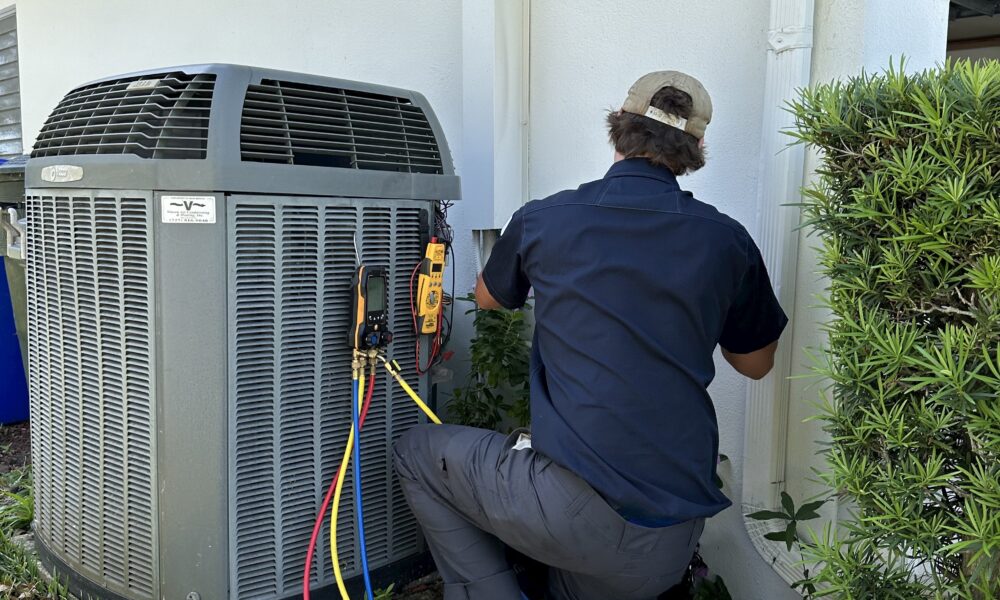
Have you ever brought home new furniture, cleaned the house, and noticed a strange smell lingering in the air? That smell is often chemical off-gassing, and while it may seem harmless, it can quietly create serious problems for your HVAC system.
In Scottsdale homes, where AC systems already work hard against extreme heat, off-gassing can speed up damage in ways many homeowners never expect.
What Is Chemical Off-Gassing?
Chemical off-gassing happens when everyday items release gases into the air. Common sources include new cabinets, flooring, furniture, paint, cleaning sprays, and air fresheners. These gases are known as VOCs, or volatile organic compounds. Once released, they do not just float away. Your HVAC system pulls them in and circulates them throughout the home.
How Off-Gassing Damages Your HVAC System
One of the biggest HVAC issues linked to off-gassing is formicary corrosion. This happens when VOCs mix with moisture on your AC’s evaporator coil.
Over time, the chemical reaction eats away at the copper tubing, creating tiny holes that leak refrigerant. These leaks are hard to detect and often lead to full coil replacement.
Off-gassing can also encourage mold and bacteria growth. When chemicals settle on damp surfaces inside your system, they create a perfect environment for slimy biofilms to form. These layers block proper heat transfer, forcing your AC to run longer cycles and increasing energy bills.
Have you noticed a musty smell when the AC turns on? That could be a sign your system is spreading chemical odors and biological growth, sometimes called dirty sock syndrome.
Other Hidden Problems Caused By Off-Gassing
Chemical exposure does not stop at coils and airflow. Over time, harsh fumes can wear down rubber seals and plastic components inside modern HVAC systems. This can lead to air leaks, sensor failures, and incorrect humidity readings. In newer systems, sensitive sensors may become inaccurate, causing your AC to cool inefficiently or cycle incorrectly.
How Scottsdale Homeowners Can Reduce These Risks
There are several ways to protect your HVAC system from chemical damage.
Improve ventilation by allowing fresh air to circulate, especially after installing new furniture or flooring
- Use activated carbon filters that capture VOCs instead of letting them reach your coils
- Install UV lighting near the evaporator coil to control mold and bacteria growth
- Avoid excessive use of strong chemical cleaners and aerosols
- Schedule regular AC maintenance to catch corrosion early
Protect Your Comfort And Your Investment
In Scottsdale’s desert climate, your AC already works overtime. Chemical off-gassing only adds to the strain. Scottsdale Air Heating & Cooling understands how local homes and air quality challenges affect HVAC performance.
Our experienced team can inspect your system, recommend air quality solutions, and help extend the life of your equipment. Contact us today to keep your home comfortable, clean, and protected year-round.
