

Along the Grand Strand, a huge share of homes sit empty for part of the year. Snowbirds head north in spring. Rental condos go dark between bookings. Second homes wait weeks for the next family visit. Before locking the door, many owners do the same thing: switch the air conditioner off to save money. On the coast, that habit tends to cost more than it saves.
Technicians at Carolina Cooling and Heating, which works on homes and condos across Myrtle Beach and the surrounding Grand Strand towns, regularly walk into units that were closed up with the system off or set far too high. The pattern is familiar. There’s a musty smell at the door, damp furniture, and sometimes mold on closet walls. It usually starts small, but a few humid weeks can change a home quickly.
The reason is simple. Moisture, not heat, is the real threat to an empty coastal home. The EPA advises keeping indoor relative humidity below 60 percent, and ideally between 30 and 50 percent. It also lists air conditioners and dehumidifiers as key tools in hot, humid climates. A shut down system can’t do that work.
Why Turning the System Off Backfires on the Coast
An air conditioner does two jobs at once. It cools the air, and it pulls water out of that air as it passes over the cold indoor coil. Turn it off in a place where summer dew points sit in the 70s, and indoor humidity climbs right along with the outdoor air.
Drywall, mattresses, carpet pads and wooden cabinets soak up that moisture slowly. They release it slowly too. By the time an owner comes back, the problem is no longer just in the air. It has settled into the materials, and running the AC hard for one afternoon won’t fix it.
Finding a Setting That Protects the Space
The goal for a vacant home isn’t comfort. It’s control. Many HVAC professionals suggest setting the thermostat in the high 70s to low 80s instead of turning it off. That’s warm enough to keep energy use reasonable but cool enough that the system still runs and removes moisture.
Pushing the setting much higher creates a different problem. The system may run so rarely that humidity drifts up between cycles. Bigger units face a related issue. The EPA notes that an air conditioner that cools the air too quickly may not run long enough to remove excess moisture. An oversized system in a small condo can hit its temperature target in minutes and shut off while the air is still damp.
That’s why so many coastal owners add a whole home dehumidifier or choose a thermostat with a humidity setting. With one of these, the equipment responds to moisture levels and not just temperature. For a home that sits empty through the muggiest months, that difference matters.
The Drain Line Nobody Thinks About
Every gallon of water the system pulls from the air has to go somewhere. It drips into a pan under the indoor coil and leaves through a small condensate drain line. In warm, damp conditions, algae and slime can grow inside that line until it clogs.
When someone lives in the home, an overflowing pan usually gets noticed fast. In an empty unit, it can leak through a ceiling or into the unit below for weeks. Condo owners have a special reason to care, since water rarely stays within one owner’s walls.
Before a long absence, it helps to have the drain line flushed and to confirm a float switch is installed. That small device shuts the system off when water backs up. Running the system without one in an empty home is a gamble with someone else’s ceiling.
Salt Air Works on the Outdoor Unit Year Round
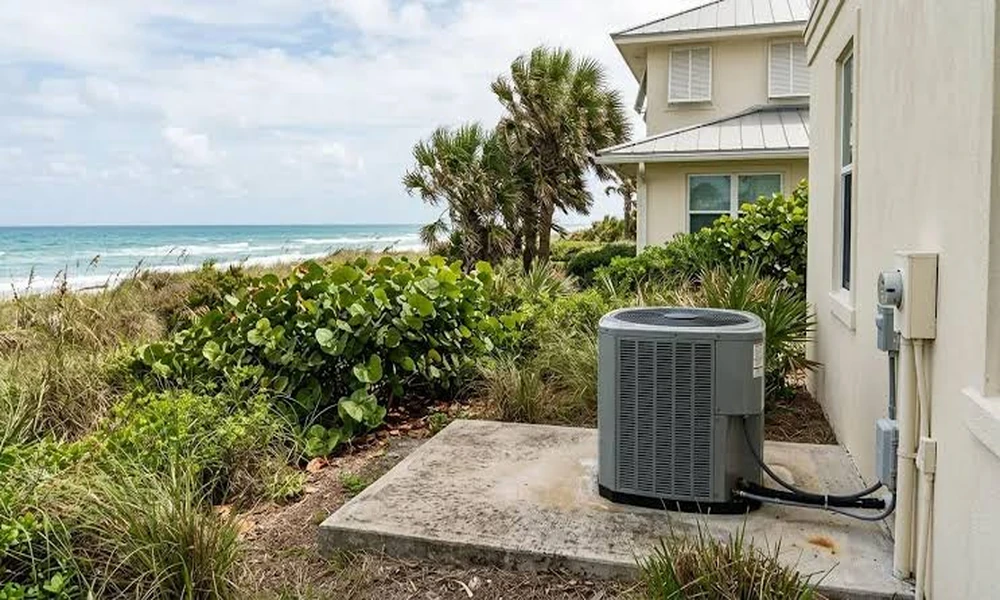
Units near the ocean face a quieter kind of wear. Salt carried on the breeze settles on the outdoor coil and fins, and it keeps working on the metal whether or not anyone is home. Over time, corrosion reduces how well the coil releases heat. That makes the system work harder for the same result.
A gentle rinse of the outdoor unit with fresh water now and then helps a lot, especially after windy stretches. Avoid a pressure washer, since it can flatten the thin fins. Keep plants, beach gear and stored furniture a couple of feet away so air can move freely around the unit.
Watching the Place From a Distance
Modern tools make absentee ownership much less of a guessing game. A few simple steps before leaving go a long way.
Connect the thermostat. A Wi-Fi thermostat lets you check temperature and, on many models, humidity from anywhere. You’ll know within hours if the system stops cooling.
Add a leak sensor. A small sensor placed by the indoor unit or water heater can send an alert the moment water appears.
Leave interior doors open. Closed closets and bedrooms trap still, damp air. Open doors let conditioned air reach every corner. Cracking cabinet doors under sinks helps too.
Swap the filter before you go. A clean filter keeps air moving well over long unattended stretches.
Name a local contact. A neighbor, property manager or rental host who can step inside after an alert turns a small problem into a quick fix.
Storm Season Changes the Plan
From June through November, coastal owners have another factor to plan around. Power outages after a tropical system can leave an empty home without cooling for days, which is exactly when humidity spikes. Surges as power returns can also damage compressors and control boards.
The National Weather Service recommends preparing your home before hurricane season begins. For HVAC systems, that means knowing where the breakers are and making sure the outdoor unit is securely anchored to its pad. It’s also worth arranging for someone to check the home after a storm passes. If water ever reaches the outdoor unit or air handler, it should be inspected before it runs again. Flood exposure can damage electrical parts in ways that aren’t visible from the outside.
Walking Back In After Weeks Away
The first minute inside an unoccupied home tells you a lot. A clean, neutral smell usually means the system did its job. A musty or earthy odor suggests humidity got ahead of it somewhere, even if nothing looks wrong yet. It’s worth checking closets, the backs of upholstered furniture and the area around the indoor unit before unpacking.
Owners who treat their air conditioner as a moisture manager, not just a cooling machine, tend to have far fewer of these surprises. A beach home is meant to be a place to relax. The right settings and a little preparation before leaving keep it that way, even through months when nobody is there to feel the heat.
