

Key Takeaways
- The best Austin neighborhood depends on daily routines, budget, space needs, and plans.
- Compare complete monthly costs, not just listing prices or price per square foot.
- Test commutes, walk the area, and visit at different times before making an offer.
- Verify school assignments, flood considerations, and nearby development through official sources.
- A weighted scorecard can make neighborhood trade-offs easier to evaluate objectively.
There is no universal “best” place to buy in Austin. A buyer who wants to walk to coffee shops and offices may prioritize a central location, while a growing household may need more bedrooms, storage, yard space, and access to parks. The right choice is the neighborhood that fits how you actually live, not simply the one with the most appealing listing photos. For buyers sorting through South Congress, central Austin, and surrounding communities, South Congress real estate agent Stephanie Taylor leads Sovereign Place Real Estate, a residential brokerage focused on personalized guidance, market insight, and buying, selling, and rental support across Austin-area communities. Local knowledge can be especially valuable when two homes look comparable online but sit on streets with very different traffic patterns, redevelopment activity, or resale appeal.
Build a Neighborhood Scorecard Before Touring Homes
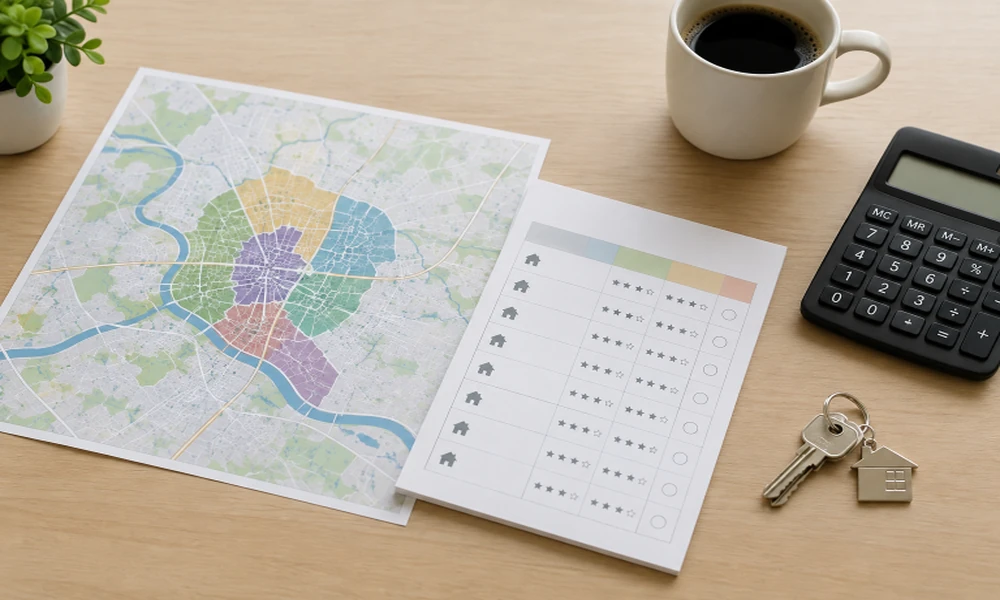
Start by choosing three to five realistic neighborhoods. Include a stretch option, a practical alternative, and areas with different lifestyle advantages. Then rate each area from one to five in the categories that matter most to your household:
- Complete monthly housing cost
- Commute time and transportation choices
- Walkability and nearby services
- School and family considerations, insights, and buying, selling, and rental support across the Austin area
- Home condition, layout, and lot size
- Noise, traffic, parking, and street activity
- Long-term resale flexibility
- Nearby construction and development risk
Weight the categories instead of treating every item equally. Someone who drives to an office five days a week may give commute time twice as much importance as restaurant access. A remote worker may place more value on a quiet street, an extra room, and dependable space for a home office.
Compare the Full Monthly Cost, Not Just the Sale Price
A lower-priced home does not always create a lower-cost lifestyle. Before deciding that one neighborhood is the bargain, estimate principal and interest, property taxes, homeowners insurance, applicable flood insurance, HOA dues, utilities, lawn care, maintenance, parking, fuel, and tolls. For example, a smaller home near South Congress or downtown may carry a higher price per square foot but reduce driving and parking demands. A larger property farther from the core may offer more interior space for the money, yet require more time and transportation spending. Neither choice is automatically better. The important question is whether the total monthly expense and time commitment feel sustainable.
Price the Commute Before Falling in Love With a Home
A route that appears easy in midday traffic can feel very different during a weekday rush. Test the drive or transit trip at the times you expect to use it. Repeat the return trip, and consider school drop-offs, gym visits, errands, and appointments rather than looking only at the distance to work.
- Drive the route at your normal departure time.
- Check access to major roads, transit stops, bike routes, and parking.
- Estimate weekly fuel, toll, and parking costs.
- Consider how a job change, school change, or hybrid schedule could affect the routine.
Transportation is part of housing cost. A home that saves money upfront may not feel like a value if the commute regularly takes hours away from family time, rest, or recreation.
Look Closely at Daily Convenience
Neighborhood convenience is often found in small details. Check the actual route to grocery stores, pharmacies, parks, medical offices, child care, libraries, restaurants, and gathering places. A destination may appear close on a map but require crossing busy roads, navigating limited sidewalks, or searching for parking. Walk or drive the blocks around any serious contender. Notice shade, street lighting, curb conditions, drainage, traffic speed, and whether people are comfortably walking dogs, pushing strollers, or biking. These observations can reveal more about the everyday experience than a broad neighborhood label.
Verify Schools and Family Needs
Buyers with school-age children should verify assignments for the specific address rather than relying on a listing description or neighborhood name. Austin ISD provides tools to find an assigned school and compare campuses, helping buyers begin their research with up-to-date district information. Also consider the practical fit of the home itself. Ask whether the layout works if the household grows, whether there is room for hobbies or remote work, and how long it takes to reach parks, sports fields, child care, or family support networks. A house can be attractive today and still be a poor fit for the next several years.
Study Housing Stock and Street Character
Austin offers a wide range of housing environments, from older homes on established streets to newer communities with contemporary layouts and shared amenities. Compare nearby homes as carefully as the home you may buy. Look for lot size, driveway access, parking patterns, sidewalk coverage, renovation quality, tree cover, grading, and the overall condition of neighboring properties. Street-level differences matter. One block may be calm and residential, while the next sits near a busy corridor, an entertainment district, a school pickup route, or a construction site. Visit in the morning, afternoon, evening, and on a weekend before deciding how a location feels.
Check Flood Concerns, Noise, and Future Construction
Due diligence should extend beyond the property line. Listen for road traffic, trains, aircraft, nearby venues, and commercial activity. Check vacant lots and adjacent properties for signs that future building could change privacy, views, parking, or traffic. Flood risk also deserves a property-specific review. The City of Austin’s FloodPro mapping tools provide floodplain and storm-drain information that buyers can use as an early research step. Pair map review with inspections, insurance questions, and professional advice when conditions warrant it.
Use Market Data as a Starting Point
Recent sale prices, active inventory, days on market, price reductions, and sale-to-list ratios can help set expectations. However, citywide figures can hide large differences between neighborhoods and even between blocks. Use data to narrow the search, then evaluate comparable homes with similar condition, lot characteristics, location, and upgrades.
A Five-Step Decision Process
- Choose your finalists. Limit the list to three to five neighborhoods.
- Set a full budget. Include ownership, transportation, and maintenance costs.
- Visit repeatedly. Go on both weekdays and weekends at varied times.
- Score each area. Apply the same weighted criteria to every option.
- Pause before offering. Make sure the choice still works beyond the excitement of a single listing.
Final Checklist Before Making an Offer
- Have you tested the commute in real traffic?
- Is the complete monthly cost within your comfort zone?
- Have you visited at different times of day?
- Have school assignments and family needs been verified?
- Have flood, drainage, noise, and development concerns been reviewed?
- Does the home support your likely needs for the next five years?
The best Austin neighborhood is the one that balances location, cost, comfort, and future flexibility with the fewest meaningful compromises. A simple scorecard and careful in-person research can turn an emotional home search into a more confident long-term decision.
Conclusion
Choosing the right neighborhood in Austin requires more than comparing home prices or relying on popular area recommendations. Buyers should consider how each location fits their daily routines, commute, household needs, budget, and long-term plans. Evaluating transportation costs, nearby services, school assignments, flood risks, property conditions, and future development can help reveal important differences between neighborhoods. An experienced local agent, such as Stephanie Taylor of Sovereign Place Real Estate, can offer valuable guidance when evaluating Austin neighborhoods and exploring available homes. By visiting potential neighborhoods, reviewing reliable local information, and using a consistent scorecard, buyers can make more informed decisions and find a home that offers lasting comfort, convenience, and value.
