

Post Preview
Key Takeaways
- Integrated Pest Management (IPM) focuses on prevention, inspection, monitoring, and targeted treatments.
- Identify the pest and its source before choosing a control method.
- Remove food sources, standing water, clutter, and potential hiding places.
- Seal entry points and monitor pest activity regularly.
- Use pesticides responsibly and only when necessary, following label instructions.
- Maintain a seasonal prevention routine to reduce recurring infestations.
- Seek professional help for persistent, hazardous, or difficult-to-identify pest problems.
Integrated pest management, often called IPM, is a practical approach to reducing pests by addressing the conditions that allow them to enter, feed, breed, and hide. Whether you manage a home, office, apartment community, or other shared property, the goal is not simply to react to a sighting. It is to inspect carefully, correct contributing conditions, and use treatments thoughtfully when needed. For property owners who need help with persistent activity, resources such as unitedpestsolutions.com can help illustrate the value of professional inspection, pest identification, exclusion work, and targeted control plans. Strong pest management begins with prevention, but it also requires knowing when a problem has moved beyond basic do-it-yourself measures.
What Is Integrated Pest Management?
IPM combines inspection, prevention, monitoring, building maintenance, physical controls, and, when necessary, carefully selected pesticide treatments. It does not mean ignoring pests or ruling out all products. Instead, it focuses on solving the reasons pests are present, such as accessible food, standing water, clutter, or gaps around utility lines. For shared facilities, the EPA’s guidance on preventing pests and reducing pesticide exposure reflects the value of coordinated cleaning, maintenance, and communication.
Why IPM Works Better Than Quick Fixes
Spraying visible pests may provide short-term relief, but activity can return if conditions remain favorable. IPM creates a repeatable process: find the source, make practical repairs, track activity, and evaluate results. This can reduce repeated sightings, limit unnecessary product use, protect building materials, and give residents or staff a clearer record of what was found and corrected.
Inspect and Identify the Problem
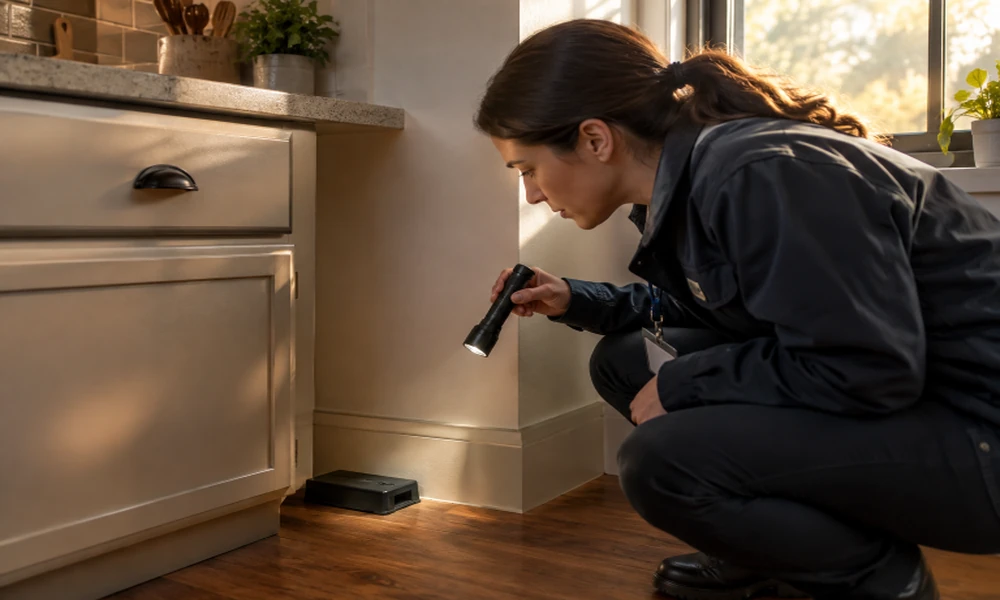
Inspection should come before treatment whenever possible. Check kitchens, break rooms, bathrooms, laundry areas, basements, garages, attics, crawl spaces, storage rooms, trash areas, loading zones, and outdoor seating. Pay close attention around pipes, vents, doors, windows, electrical lines, and appliances. Record droppings, gnaw marks, shed skins, wings, nests, egg cases, grease trails, unusual odors, and sounds. Note the date, time, and exact location of each sign. Accurate identification matters because ants, cockroaches, rodents, mosquitoes, and bed bugs each require different control methods. Take a clear photo if it is safe to do so, but do not rely on one quick sighting to identify a pest.
Remove Food, Water, and Shelter
Food and Moisture Control
Keep dry goods and pet food in sealed containers, promptly clean up crumbs and grease, and empty indoor trash regularly. In offices, food should not remain on desks or in break rooms overnight. Repair dripping faucets and leaking pipes, dry damp areas around sinks and dishwashers, clear gutters, and remove standing water from outdoor containers.
Clutter Control
Cardboard, paper, fabric, and unused supplies can create protected hiding places. Recycle shipping boxes instead of storing them long-term, keep stored items off the floor when practical, and leave space between stored goods and walls to make inspections easier. Avoid moving potentially infested furniture or boxes into another room, since this can spread the problem.
Seal Entry Points and Monitor Activity
Exclusion prevents pests from settling indoors. Check door sweeps, weatherstripping, window screens, garage doors, basement windows, foundation cracks, and openings around plumbing or wiring. Trim vegetation that touches the building, and keep firewood, mulch, and stored materials away from exterior walls where practical. Monitoring helps determine whether conditions are improving. Sticky monitors can help track crawling insects in appropriate locations, while traps should always be placed where children and pets cannot access them. Check devices on a schedule and record what is found, where it was found, and whether activity is increasing or declining.
Choose Targeted Treatments
Treatment should match the pest, location, and level of activity. Start by correcting sanitation, moisture, and access problems. Then consider lower-risk physical options, such as screens, traps, barriers, and exclusion repairs. If a pesticide is needed, read and follow the entire label, keep products away from food and occupied areas as directed, and recheck the area afterward. Never mix products unless a label specifically permits it, use outdoor-only products indoors, or assume that applying more will work better. Foggers and broad treatments may not reach pests hiding in wall voids, cracks, or inaccessible nesting areas.
How Homes, Offices, and Shared Buildings Differ
Homes often require close attention to kitchens, bedrooms, pet feeding areas, garages, attics, used furniture, packages, and stored belongings. Offices and multi-unit properties require coordination among cleaning teams, maintenance personnel, tenants, food-service workers, and management. Break rooms, delivery doors, dumpsters, storage areas, and utility spaces should be included in regular checks. Written reporting is especially useful in shared settings because it shows patterns across units or departments. Building managers can also draw on integrated pest management principles when developing clear practices for indoor environments used by many people.
A Seasonal Pest Prevention Plan
- Spring: Repair screens, inspect foundation gaps, clean gutters, and check damp areas.
- Summer: Remove standing water, keep outdoor bins closed, and watch for ants, flies, mosquitoes, and stinging insects.
- Fall: Seal openings before cooler weather, move firewood away from walls, and inspect attics and garages.
- Winter: Watch for signs of rodents, inspect stored decorations and fabrics, and keep food supplies sealed.
When to Seek Professional Help
Qualified help may be the safest choice when the pest cannot be identified, activity continues after prevention steps, pests are inside walls or ceilings, rodent damage is extensive, or stinging insects are near doors and walkways. Assistance is also appropriate when the issue affects food storage, business operations, shared housing, or people with particular health concerns.
Frequently Asked Questions
Does IPM Mean Pesticides Are Never Used?
No. IPM allows targeted pesticide use when prevention and physical controls are not enough. The objective is to use the appropriate method in the appropriate place and only as needed.
Can Homeowners Use IPM on Their Own?
Yes, many minor issues improve with cleaning, moisture control, sealing gaps, reducing clutter, and monitoring. Persistent, hazardous, or difficult-to-identify problems may require professional support.
What Is the First Step After Seeing a Pest?
Stay calm, record the location, look for additional signs, and check for food, water, shelter, and entry points. A careful first inspection is more useful than an immediate, poorly matched treatment.
Final Thoughts
Effective pest management relies on consistent property maintenance, preventive measures, and timely intervention rather than quick reactions to visible infestations alone. Keeping indoor and outdoor spaces clean, managing food waste, controlling excess moisture, sealing cracks and openings, and removing potential nesting or breeding areas can help discourage pests from settling in. Regular inspections are equally important because they allow property owners to identify early signs of activity, recognize recurring problem areas, and address conditions that may attract insects or rodents before infestations become more difficult to manage. When pest activity is detected, targeted treatments and appropriate control methods can provide a more practical approach than unnecessary chemical applications. It is also important to consider the property’s surroundings, including drainage, landscaping, storage areas, and structural gaps that may provide pests with access or shelter. By combining sanitation, exclusion, monitoring, and responsible treatment decisions, homeowners and businesses can reduce common pest concerns, protect their spaces, and maintain cleaner, safer, and more manageable environments over time.
