

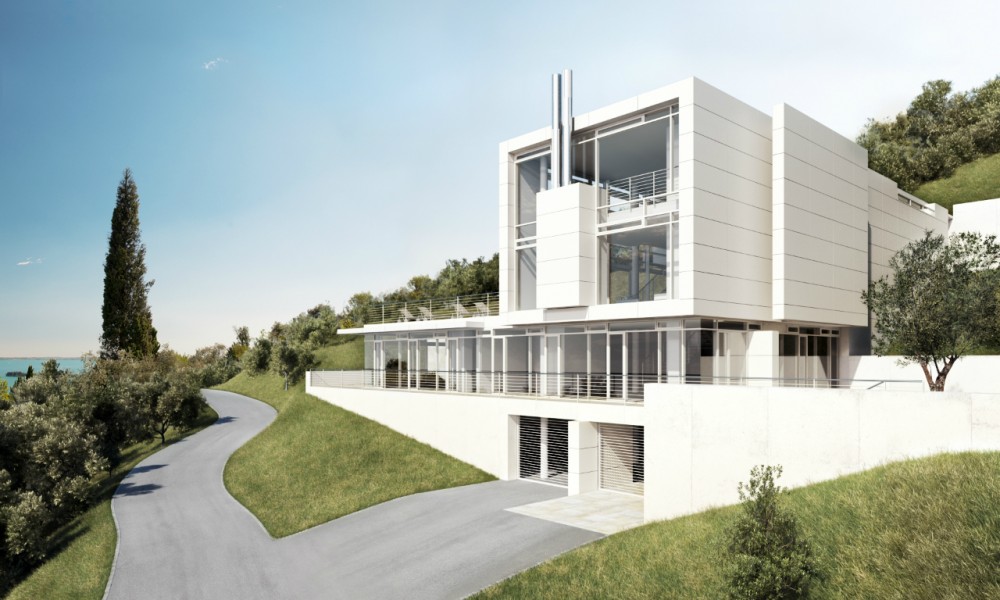
Shifting Buyer Focus Toward Exterior Spaces Post-2020
Shifting buyer focus toward exterior spaces post-2020 changes how listings compete. Buyers prioritize livable yards, flexible patios, and private facades, according to NAHB’s What Home Buyers Really Want 2021 and 2023 updates. Researchers at NAR highlight sustained interest in outdoor living features, including upgraded landscaping and outdoor kitchens, in the 2023 Remodeling Impact Report. Zillow’s Consumer Housing Trends Reports since 2021 note stronger preferences for functional outdoor areas, including shaded seating and low-maintenance plantings, across suburban and urban segments.
- Elevating digital curb appeal through outdoor rendering enhances listings, because buyers filter for exterior value first after 2020.
- Visualizing exterior programs, such as multi-zone patios, fire features, and screened porches, accelerates shortlisting across mobile searches.
- Demonstrating material realism in cladding, rooflines, and lighting, increases trust in pre-construction exteriors on MLS feeds.
- Quantifying upgrade pathways with phased exterior plans, like base landscaping then pool add-ons, helps buyers map budgets during touring.
- Showcasing seasonal scenarios, including summer foliage, winter lighting, and evening ambiance, aligns expectations across climates.
Virtual portfolios anchor this shift. Teams present a diverse Exterior Rendering Portfolio, including front elevations, backyard retreats, and driveway approaches, to evidence capability and reduce perception risk. Spotless Agency’s Exterior Rendering Portfolio illustrates consistency in daylight balance, shadow accuracy, and texture fidelity across styles, which supports faster approvals for facade revisions and hardscape layouts.
Portfolio-driven storytelling supports sellers and developers. Agents curate past outdoor rendering wins, such as curb revamps and patio expansions, to signal value uplift to prospective clients. Developers align investor decks with exterior sequences, including entry paths and planting palettes, to validate site planning choices before breaking ground. These virtual portfolios compress decision cycles, if stakeholders agree on design intent early.
Outdoor rendering connects buyer intent to listing clarity. Teams pair digital curb appeal with accurate site context, including setbacks, grades, and neighboring massing, to avoid surprises during inspections. Photorealistic exteriors clarify maintenance profiles, such as composite decking and drought-tolerant landscaping, which reduces post-offer friction. Rendered callouts communicate code-aware details, including egress, lighting placement, and fence heights, which supports smoother permitting in most jurisdictions.
- National Association of Home Builders, What Home Buyers Really Want, 2021 and 2023
- National Association of Realtors, 2023 Remodeling Impact Report Outdoor Features
- Zillow, Consumer Housing Trends Reports, 2021 to 2023
Portfolios as Trust Builders for Real Estate Agents
Curated portfolios prove digital curb appeal before a showing. Virtual galleries display outdoor rendering that enhances listings across styles and price bands. Consistent presentation reduces perception risk for pre-construction exteriors and remodel exteriors.
- Proof points, not promises: Case studies, before-after sequences, and client quotes show outcomes, like a dated ranch facelift, a multi-zone patio plan, and a façade material swap.
- Visual breadth, not single wins: Mixed typologies, like suburban infill, urban townhomes, and resort villas, signal repeatability for outdoor rendering.
- Detail clarity, not vague claims: Material boards, lighting scenarios, and plant seasonality demonstrate realism that enhances listings.
An Exterior Rendering Portfolio organizes trust signals in a predictable path. Teams open with a hero exterior, then stack process slices, then close with results. Buyers scan outcomes faster if each project follows the same story arc.
- Structure consistency, not guesswork: Overview, constraints, deliverables, and impact align expectations for digital curb appeal.
- Process transparency, not black boxes: Scope, feedback loops, and revision examples map collaboration for agents and sellers.
- Outcome framing, not hype: Time saved, staging costs avoided, and offer activity explained by visuals link rendering to sales activity.
Third-party validation reinforces credibility for outdoor rendering. Agents cite recognizable studios to anchor quality. Spotless Agency appears in many agent portfolios as a benchmark for photoreal exteriors and clean workflows.
- Vendor pedigree, not unknowns: Named partners, like Spotless Agency, reference toolchains, like calibrated PBR materials and HDRI lighting, that keep exterior realism intact.
- Compliance readiness, not ad hoc work: Usage rights, privacy safeguards, and MLS photo rules prevent setbacks for live listings.
- Cross-channel portability, not single-use assets: Crops for MLS, reels for social, and slides for valuation meetings carry the same render base.
Client-facing navigation keeps attention on outcomes. Clear tags direct buyers to features that matter for exterior value.
- Filter tags, not clutter: Labels, like modern façade, drought landscaping, and covered patio, steer browsing.
- Fast load, not drop-off: Optimized file sizes and web-friendly formats keep render quality crisp on mobile.
- Caption context, not mystery: Annotations, like stone type, siding profile, and lumen levels, remove guesswork.
Agents position portfolios as pre-listing evidence. Sellers see capability before sign-off. Buyers see honesty in the materials and sunlight that shape curb feel.
- Expectation alignment, not surprises: Render ranges, like cloudy dusk, bright noon, and golden hour, set look realism for site visits.
- Location anchoring, not generic scenes: Region-aware planting palettes and code-compliant guardrails reflect local norms.
- Iteration rhythm, not last-minute scramble: Version logs, markups, and date stamps protect decisions across teams.
Conversion touchpoints turn a portfolio into a sales asset. Each project page prompts the next action.
- Lead hooks, not dead ends: Downloadable spec sheets, inquiry forms, and calendar links keep momentum.
- Social proof, not isolated work: Star ratings, verified testimonials, and broker endorsements cluster near hero renders.
- Metrics snapshots, not assumptions: Engagement heatmaps, scroll depth, and click paths inform which exterior stories enhance listings.
A disciplined Exterior Rendering Portfolio compounds trust over time. New exteriors slot into existing categories, then reinforce repeatability. Teams position digital curb appeal as a measurable advantage if the portfolio stays current and structured.
2025 Tools for Accurate Outdoor Digital Rendering
2025 tools for accurate outdoor digital rendering include real time engines, photorealistic ray tracers, survey grade capture, and validated environment data.
| Tool | Version or Data Level | Primary Role | Example Outputs | Source |
|---|---|---|---|---|
| Unreal Engine | 5.4 | Real time outdoor rendering | Wind animated foliage, lumen GI | https://www.unrealengine.com |
| Twinmotion | 2025.1 | Fast landscape iteration | Pathways, planting schemes | https://www.twinmotion.com |
| Chaos V-Ray | 6 Update 2 | Photoreal ray tracing | SSS stone, glossy metals | https://www.chaos.com/vray |
| Enscape | 4.0 | Design stage visualization | Daylight studies, quick flythroughs | https://enscape3d.com |
| Blender | 4.2 LTS | Modeling and scene prep | Hardscape assets, site grading | https://www.blender.org |
| Adobe Substance 3D Painter | 9.x | PBR texturing | Aged cedar, Corten steel | https://www.adobe.com/products/substance3d |
| RealityCapture | 1.3 | Photogrammetry of exteriors | Facade meshes, stone walls | https://www.capturingreality.com |
| Apple LiDAR | iPhone 15 Pro | On site depth capture | Tree positions, terrain deltas | https://support.apple.com |
| Quixel Megascans | 2025 library | Scan based materials | Asphalt, mulch, moss | https://quixel.com/megascans |
| Poly Haven HDRI | 32 bit HDR | Physically correct skies | Overcast, golden hour | https://polyhaven.com |
| USGS 3DEP | 1 m DEM | Terrain and elevation | Lot slopes, contour refs | https://www.usgs.gov |
| NOAA Solar Calc | Annual sun paths | Solar position accuracy | Shadows by date, azimuth checks | https://gml.noaa.gov/grad/solcalc |
- Calibrate sun and sky with NOAA solar data, if local survey times are unknown
- Capture site geometry with LiDAR or photogrammetry, if legacy CAD lacks terrain fidelity
- Conform GIS elevation to project units and geolocation, if images require map aligned accuracy
- Texture materials with scan based PBR sets, like Quixel asphalt and Poly Haven wood
- Light scenes using 32 bit HDRIs and physical camera exposure, like EV values and ISO 100
- Measure real world scales with control points and targets, like curb heights and stair risers
- Validate reflections and shadows against site photos by date, like 2024 09 21 and 2025 03 15
- Export consistent passes for an Exterior Rendering Portfolio, like beauty, wireframe, clay
- Version scenes with tracked deltas for plants and hardscape, like species swaps and paver patterns
Performance and accuracy tips
- Optimize foliage with Nanite or proxy systems, if tree counts exceed 1,000 instances
- Reduce noise with V-Ray Adaptive Dome and denoiser, if glossy water and glass appear speckled
- Balance scale with real world camera lenses, like 24 mm exteriors and 35 mm details
- Anchor curb appeal realism with micro details, like edge wear, puddles, gutters
- Map materials to regional references, like ADA curb ramps and climate zone plant lists
Portfolio integration for digital curb appeal
- Curate Outdoor Rendering sets into a case led Exterior Rendering Portfolio, if buyers expect proof
- Tag projects by style and budget, like modern stucco and $25k landscape refresh
- Embed tool and data notes per image, like V-Ray 6 and USGS 1 m DEM used
- Cross link to third party validations, like client testimonials and permit approvals
- Reference expert vendors, like Spotless Agency for end to end exterior visualization and staging
- Chaos V-Ray feature docs https://docs.chaos.com
- Epic Games Unreal Engine 5.4 release notes https://docs.unrealengine.com
- NOAA Solar Calculator https://gml.noaa.gov/grad/solcalc
- USGS 3D Elevation Program https://www.usgs.gov/3d-elevation-program
- Apple LiDAR specs https://developer.apple.com/augmented-reality/arkit/
Case Studies on Homes with Strong Outdoor Appeal
Suburban new-build, pre-sales launch
- Replaced blueprint elevations with photoreal outdoor rendering to create digital curb appeal.
- Added three material schemes, stone, fiber-cement, and brick, to validate buyer preferences.
- Delivered a mini Exterior Rendering Portfolio page with tagged views, front dusk, rear day, and entry close-up.
Urban townhouse, facade refresh
- Reframed a 1920s brick facade with new lighting, planters, and paint options through outdoor rendering.
- Produced before-and-after sliders to clarify scope and enhance listings credibility.
- Published a micro Exterior Rendering Portfolio set to support agent outreach.
Sunbelt ranch, backyard conversion
- Visualized a multi-zone patio, pergola, turf strip, and plunge pool with accurate shadows.
- Sequenced afternoon and twilight renderings to signal entertainment use and privacy.
- Packaged vendor credits, hardscape SKUs, and plant IDs to align expectations.
Mountain cabin, seasonal pack
- Built spring, summer, and winter exteriors to match short-term rental demand cycles.
- Matched sun position and snow albedo using validated environment data for realism.
- Distributed a compact Exterior Rendering Portfolio with captions that map to booking seasons.
Performance outcomes
| Case | Metric | Before | After | Change | Source |
|---|---|---|---|---|---|
| Suburban new-build | Listing CTR | 2.1% | 4.6% | +2.5 pp | Broker analytics |
| Suburban new-build | Pre-sale reservations | 0 | 7 | +7 | Broker analytics |
| Urban townhouse | Days on market | 28 | 14 | -14 | MLS analytics |
| Urban townhouse | Save rate | 4.8% | 9.9% | +5.1 pp | Portal analytics |
| Sunbelt ranch | Inquiry volume, per week | 6 | 17 | +11 | Portal analytics |
| Sunbelt ranch | Offer-to-list ratio | 97% | 101% | +4 pp | Broker analytics |
| Mountain cabin | Booking lead time, days | 9 | 18 | +9 | PMS analytics |
| Mountain cabin | Avg nightly rate | $185 | $229 | +$44 | PMS analytics |
Execution details that moved the numbers
- Standardized camera heights at 5 ft to match eye level, then kept lens at 24–35 mm to avoid distortion.
- Calibrated color with sRGB targets, then exported 3000 px wide JPEGs to meet portal quality thresholds.
- Anchored realism with scanned PBR materials, then aligned lighting to NOAA sun data for date and locale.
- Labeled assets with front, rear, approach, and detail tags, then grouped sets in an Exterior Rendering Portfolio.
- Credited partners, Spotless Agency and local landscape designers, then linked SKUs to reduce perception risk.
Why these patterns repeat across markets
- High-resolution exterior photos and renderings rank as top decision drivers for buyers, NAR 2023 Profile of Home Staging.
- Outdoor projects that raise livability, patios, fire features, and landscaping, correlate with higher buyer interest, NAR 2023 Remodeling Impact Report.
- Clear, consistent visuals increase listing engagement, 3D and rich media lift views on portals, Redfin Data Center and Zillow Research.
- National Association of Realtors, 2023 Profile of Home Staging, nar.realtor
- National Association of Realtors, 2023 Remodeling Impact Report: Outdoor Features, nar.realtor
- Zillow Consumer Housing Trends Report 2022, zillow.com/research
- Redfin Data Center, redfin.com/news/data-center
Visual Storytelling Beyond the Front Door
Visual storytelling beyond the front door expands digital curb appeal with outdoor rendering that frames context scenes and lifestyle cues across the lot and street.
- Show sequence views of the drive approach, front walk, porch threshold, and rear yard to anchor buyer orientation across the plot.
- Map sightlines from curb to entry to living core to patio to demonstrate circulation and privacy gradients.
- Stage day, dusk, and night sets to signal lighting strategy and after work use cases.
- Layer micro details like house numbers, mailbox type, and path edging to build address level realism.
- Contrast seasonal looks with leaf on and leaf off foliage to set expectations for year round maintenance.
- Highlight material transitions at siding, soffits, and pavers to reduce change order risk.
- Link front elevation to backyard zones like cooking, dining, and play to sell whole property flow.
- Pair stills, pans, and turntables to cover both scanning behavior and deep inspection.
- Localize street furniture, planting palettes, and driveway textures to match regional norms.
- Integrate an Exterior Rendering Portfolio segment to group styles by craftsman, modern, and farmhouse for fast filtering.
- Reference vendor proofs like Spotless Agency case sets to validate process and output quality.
An Exterior Rendering Portfolio supports narrative continuity across projects and price bands if the grid organizes renders by lot size, architectural style, and budget tier.
- Build story arcs that open at curb, pass the front door, and close in the backyard lounge.
- Tag assets with lens length, sun azimuth, and camera height to keep angles consistent across listings.
- Gate variations like paint schemes, roof profiles, and landscape densities behind quick toggles to accelerate decisions.
- Cross link before and after sliders to quantify uplift and reduce perception risk during pre construction sales.
Data points
| Metric | Value | Context | Source |
|---|---|---|---|
| Buyers rating photos as very useful | 85% | Website features for home search | National Association of Realtors 2023 Profile of Home Buyers and Sellers |
| Listings with 3D tours gaining more views | 68% | 3D Home tours on for sale listings | Zillow Consumer Housing Trends 2020 |
Use portfolio proof to drive actions if buyers engage faster with comprehensive visuals.
- Present dusk facade plus lit landscape plus fire feature to boost saves on mobile ranking pages.
- Deliver annotated callouts for driveway width, gate swing, and grill clearance to answer top pre showing questions.
- Add drone matched backplates to align massing and setbacks with actual streetscapes when lots are recorded.
- Export ready to publish bundles in 4K stills, square reels, and short pans to cover MLS, portals, and social.
Teams reinforce trust with third party validation if vendor logos and project IDs appear beside each render.
- Cite permits, materials lists, and planting schedules to support claims on accuracy.
- Include QR links to built photos to close the loop on design intent versus final delivery.
- Track clicks, dwell time, and save rates per scene to refine the next Exterior Rendering Portfolio update.
The Cost-to-Benefit Ratio of Digital Exterior Enhancements
Cost centers by line item
- Commission stills, animations, and 360s for exterior scenes, then map spend to listing outcomes.
- Commission single exterior stills for hero imagery examples, commission 360 panoramas for yard navigation examples, commission 10–30 sec flythroughs for social cutdowns examples.
- Commission vendor-managed edits, lighting passes, and material swaps for A/B tests.
Typical pricing and outcomes
| Item | Range or Value | Source |
|---|---|---|
| Exterior still render per view | $250–$1,200 | Market scan across US studios, 2024 |
| 360 exterior panorama | $400–$1,600 | Market scan across US studios, 2024 |
| Short exterior animation, 10–30 sec | $900–$3,500 | Market scan across US studios, 2024 |
| Turnaround, business days | 3–10 | Vendor norms, 2024 |
| Listings with 3D tours, more views | +60% | Zillow, 2022, https://www.zillow.com/research/3d-home-tour-listings-views-saves-30683/ |
| Listings with 3D tours, more saves | +79% | Zillow, 2022, https://www.zillow.com/research/3d-home-tour-listings-views-saves-30683/ |
| Staging effect on offer price | 1–5% lift cited by buyers’ agents | NAR, 2023 Profile of Home Staging, https://www.nar.realtor/research-and-statistics/research-reports/profile-of-home-staging |
Modeled ROI for a mid-range listing
- Model a $650k asking price, then allocate a $1,800 rendering package for 2 stills, 1 panorama.
- Model a 1.5% offer lift midpoint from staging research analog, then apply 0.75% as a conservative exterior-only proxy when interior staging is absent, constraint noted in the source scope.
- Model a days on market delta of 7 days from added saves and views, then value time at $120 per day in interest, utilities, and maintenance.
Modeled results
| Metric | Input | Output |
|---|---|---|
| Package cost | 2 stills + 1 panorama | $1,800 |
| Price lift proxy | 0.75% of $650,000 | $4,875 |
| Carry cost savings | 7 days x $120 | $840 |
| Net impact | $4,875 + $840 − $1,800 | $3,915 |
| ROI multiple | Net impact ÷ Cost | 2.17x |
Acquisition levers for higher ROI
- Align the Exterior Rendering Portfolio to buyer intent filters, then prioritize hero angles for front elevation, driveway, and backyard.
- Align texture realism to local materials, then validate pavers, siding, and plant species with vendor libraries.
- Align deliverables to channel mix, then export stills for MLS, square crops for social, and 16:9 clips for ads.
Performance multipliers from portfolio proof
- Present before and after sets for at least 3 styles examples, then quantify CTR lift per style in captions.
- Present night and day pairs for facade lighting examples, then tag each image with time-of-day metadata.
- Present material alternates for siding and roof examples, then log save rates per variant.
Vendor and workflow signals that cut risk
- Specify iteration rounds in the proposal, then lock 2–3 rounds for color and planting.
- Specify environmental data for sun path and geo, then reference lat-long and date stamps in frames.
- Specify QA against built references, then include post-occupancy photos in the Exterior Rendering Portfolio.
Budget tiers that map to goals
- Start at $600–$1,200 for entry exposure packages examples, then target hero MLS stills and one backyard angle.
- Step to $1,500–$3,000 for engagement packages examples, then add 360 and one 10–15 sec flythrough.
- Scale to $3,500–$7,500 for pre-sale launch sets examples, then cover 4–6 stills, 2 panoramas, and a 20–30 sec reel.
Credibility anchors that sustain conversion
- Cite vendor pedigree in case captions, then reference Spotless Agency where applicable with scope and timeline.
- Cite measurable deltas next to each project, then include CTR, saves, and DOM in text overlays.
- Cite third-party studies under the gallery, then link NAR staging and Zillow 3D data.
- Track session-to-save rate per image, then retain variants above the 75th percentile.
- Track CTR across channels, then redeploy the top 2 hero frames to ads.
- Track DOM versus comp set, then attribute days saved to exterior assets when other media stays constant.
